
Days after completing a $6.5 billion acquisition of Ambuja Cements and ACC, billionaire Gautam Adani said his group has planned to double cement manufacturing capacity and become the most profitable manufacturer in the country. He saw a multifold rise in cement demand in India on the back of record-breaking economic growth and the government's infrastructure creation push, which will give significant margin expansion. In a speech made at an event to mark the completion of the acquisition on September 17, the Adani Group founder and chairman said the ports-to-energy conglomerate has in a single stroke become the second largest cement manufacturer in the country.

Fresh capital raised by companies by way of initial public offerings (IPOs) is set to hit a 14-year high, thanks mainly to Zomato's maiden offering. India Inc has raised about Rs 19,300 crore in fresh capital by maiden offerings, including the Rs 9,000 crore the food delivery company will raise this week, so far in 2021. The best year in terms of fresh fund-raise was 2007, when companies had raised Rs 32,102 crore. With Paytm planning to issue fresh shares worth Rs 12,000 crore, the domestic market looks set to surpass that tally this year.

'The shadow banks are currently facing a liquidity and solvency crisis.' 'The danger is that it could potentially engulf the entire financial system because shadow banks have borrowed huge amount of money from banks, mutual funds, pension funds, and insurance companies.'

this move by the government is likely to iron out the current challenges for the NBFCs and in turn help the real estate sector.
The Kolkata-based firm already has a presence in 22 states with over 2,000 branches and 5.9 million borrowers.
India will get $35 billion from Japan over the next five years for developmental projects, including building of smart cities and next generation infrastructure as also cleaning of the Ganga, as Premier Shinzo Abe on Monday pledged to partner Prime Minister Narendra Modi's "ambitious" vision of inclusive development.

Coming Wednesday, Finance Minister (FM) Nirmala Sitharaman will present the 2023 Union Budget - the last full Budget ahead of the 2024 Lok Sabha elections. While India exited 2022 as a relatively bright spot in the global economy, the FM will endeavour to present a Budget that insulates India's economy against global headwinds and recession in advanced economies, while sticking to the path of fiscal consolidation. In this, she is being helped by her core team of trusted advisors.

Firms are still barred from holding board positions in the special purpose vehicle that will develop the airport.

Officials asked what the point was in going through banks when the government has to give guarantees.
'Chidambaram, lots of people argue not without justification, is all about bluff and bluster without any concrete achievement on the ground. His record in the finance ministry fully endorses that view,' argues Virendra Kapoor.
Hike in planned public-sector capital expenditure will be credit-positive for infra cos
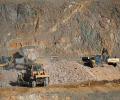
Parliament has cleared the Mines and Minerals (Development and Regulation) Amendment Bill, 2023, recently. The objective of the Act is to invite investments from the private sector, including foreign companies, for mining minerals such as lithium and other critical minerals. Other than lithium, some of these minerals were classified as atomic minerals, including beryl and beryllium, niobium, titanium, tantalum and zirconium.

We have the workforce, now we need to ensure that we take full advantage of game-changing technologies and geopolitical openings, suggests Jayant Sinha, chairman, Parliament's Standing Committee on Finance.
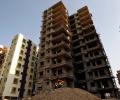
If you are looking to stay in the property, unnecessary delays will only increase the cost.

All banks are eligible for privatisation. A committee of secretaries will decide which banks will be privatised, says Financial Services Secretary Debasish Panda.
.jpg)
The nomination of cluster heads for defence, infrastructure and finance business is awaited.

India can become the number one automotive manufacturing hub in the world within five years, but auto companies need to enhance safety features to reduce deaths due to road accidents, Union Minister Nitin Gadkari said on Thursday. In his inaugural address at the Auto Expo 2023 here, the minister for road transport and highways asserted that the government's target is to reduce these accidents by 50 per cent before the end of 2024 while asking the auto industry to take suo moto action for road safety as the government doesn't want to make anything mandatory. Gadkari's sentiments were also echoed by Minister of Heavy Industries Mahendra Nath Pandey, who lamented that while India has only 1 per cent of the total overall vehicles, the country accounts for 11 per cent of the total global deaths due to road accidents.

'Job opportunities will be available in pharma, retail, medical, virtual business operating sectors, IT sector, telecommunications, infrastructure development, healthcare sector and e-commerce.'

Tamal Bandyopadhyay offers some unsolicited advice for a government wh,ich came to power, with brute majority and the nation's pragmatic chief money man.

'Most importantly, marking a departure from the past, the RBI has made it clear that it is not overtly worried about the level of the local currency,' notes Tamal Bandyopadhyay.

10 non-bank and non-finance stocks from the BSE500 Index universe that offer an optimal blend of low valuation, reasonably robust revenue and earnings growth in recent quarters, a strong balance sheet, and most importantly, positive cash flow from their operations.

The approval was announced by Environment Minister Greg Hunt, who said "after undertaking a thorough assessment and consideration under national environment law, I have approved the Carmichael Coal Mine and Rail Infrastructure project, subject to 36 strict conditions".

'If we want faster growth and want greater flow of credit towards the private sector, it's important to have many more of such large entities.'

The Ambani brothers, Mukesh and Anil, came together on Thursday to raise the issue of stalled projects plaguing India Inc and implored the Maharashtra government and the Centre to make Mumbai, India's financial capital, an easier place for business and investments. "Several projects are stuck for many years in Mumbai and we would like to know how the government intends to improve the financing and execution of projects, including those relating to infrastructure and education which have been in limbo for long and are affecting the growth of the city," Reliance Industries Ltd (RIL) Chairman Mukesh Ambani told Finance Minister Arun Jaitley. Seated on the same table was his brother, apart from Tata Group Chairman Cyrus Mistry and State Bank of India (SBI) Chairman Arundhati Bhattacharya. Jaitley was addressing the Mumbai Next MMR Transformation conclave, organised by the Maharashtra government and Mumbai First here, through video conference. In his reply, Jaitley said the government was exploring several options of infrastructure financing in India and that a number of international bodies were ready to fund infrastructure development projects. He added the government was keenly considering these funding sources. While praising Maharashtra Chief Minister Devendra Fadnavis for honesty, Jaitley also had a word of advice. Apart from being honest, the government had to be decisive, he said. On his part, Reliance Group Chairman Anil Ambani told the chief minister about his experience of decisions being delayed due to an indecisive bureaucracy and the need to protect officials who wanted to take quick decisions. "Through the past many years, we have faced a number of obstacles in decision-making," he said, adding he was speaking as someone who had lived and invested in Mumbai. Fadnavis responded by saying he would bring about a transparent process to ring-fence officials. Both the Ambani brothers have announced a number of infrastructure projects in and around Mumbai, including a world-class convention centre in Bandra Kurla Complex by RIL, but very few have actually fructified. RIL's special economic zone project failed to take off due to land acquisition problems in Raigarh, while a second SEZ near Mumbai is stuck due to lack of clarity in SEZ norms. The first phase of the Mumbai Metro, set up by Anil Ambani's Reliance Infrastructure, was marred by cost overruns and run-ins with the government over fares. Subsequently, the company withdrew from the second and larger phase, citing inordinate delay. Anil Ambani also withdrew from Mumbai's sea link project on the same grounds. The brothers had also bid for a trans-harbour sea link between Navi Mumbai and Mumbai under the Congress-Nationalist Congress Party government, but their bid was rejected. Reliance Infrastructure is also the power supplier to more than half of this city. Participating in the conclave, some of India Inc's leading bankers said making Mumbai a financial hub would take at least a decade. SBI's Bhattacharya said the Indian currency should be made fully convertible and facilities should be created for it. "However, for this, the economy needs to look up and that will happen only in the next 7-10 years, not immediately," she added. Sunil Kaushal, Chief Executive Officer of Standard Chartered, India, pitched for strong infrastructure to support development. "We will take a long time to develop into a global financial centre. We need to solve transport bottlenecks in Mumbai and have lifestyle facilities for people working in and around these areas," he said.

The third-quarter financials didn't excite market watchers. But equity investors can still make money if they invest in the right stocks.

Why do we need a bad bank, owned by the banks themselves when there are at least 28 ARCs around, asks Tamal Bandyopadhyay.
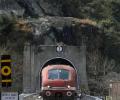
The Queensland Government has declared the rail corridor as a Strategic Development Area, the statement said.

It could be a matter of concern that foreign shareholders of the NSE are registered in tax havens such as Mauritius and Cyprus.
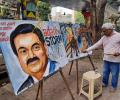
Embattled Adani group has appointed accountancy firm Grant Thornton for an independent audit of some of its companies in a bid to come clean of the damning allegations levelled by the US short-seller Hindenburg Research and to assure investors and regulators. Sources said the audit is primarily to show to regulators like the Reserve Bank of India (RBI) that the group has nothing to hide and it is in compliance with relevant laws. The audit will specifically look into if there was any misappropriation or repatriation of funds and if loans were used for any purpose other than the one they were intended for.

India will require a total investment of $10.1 trillion to achieve net-zero emissions by 2070, while the nation could face a shortfall of $3.5 trillion, a study by CEEW Centre for Energy Finance (CEEW-CEF) said. At the recently concluded COP26, Prime Minister Narendra Modi announced India's aim to achieve net-zero emissions by 2070. "India would need cumulative investments of $10.1 trillion to achieve net-zero emissions by 2070, according to an independent study released today by the CEEW Centre for Energy Finance (CEEW-CEF)," a statement said.

'At the heart of the strategic relationship between our countries are economic ties.'

Vodafone Idea's (Vi's) search for a lifeline has turned longer and tougher even as it continues to lose customers and delay vendor payments. Vi's much-needed Rs 1,600-crore fundraising plan got stuck due to the government's silence on picking up a proposed 33 per cent equity in the financially stressed telco. The development spells further trouble for the company, which has an overall debt pile of Rs 2.2 trillion, including hefty dues to the government.

41 listed firms made 73 donations to gaushalas (cow shelters) and other cow-related charities over the last four years. The donations range from a few thousand rupees to a million.

'Policy-sensitive sectors will wait and watch, but policy-agnostic areas will continue based on normal consumption demand.'

The Budget kept away from mood dampeners such as an increase in taxes (capital gain taxes) and even the much-feared introduction of Covid cess and wealth taxes, says Nimesh Kampani, chairman, JM Financial.

Housing sector to benefit from Budget.

In the midst of third wave of COVID-19, Finance Minister Nirmala Sitharaman has come up with an impactful Budget which is balanced, fiscally prudent and growth-oriented, the USA India Chamber of Commerce has said. President of the Boston-based USA India Chamber of Commerce (USAIC) Karun Rishi, however, said it is a matter of concern that the budget lacks tangible measures to increase revenue generation. "Opting to keep the fiscal deficit at 6.9 per cent and increase capital expenditure by 35 per cent is a masterstroke. "The annual budget estimates the effective capital expenditure of Rs 10.68 lakh crore in 2022-23, making up about 4.1 per cent of the GDP," he said. "A phenomenal increase in the government's capital expenditure is likely to facilitate the expenditures on infrastructure and create jobs.

Housing Development Finance Corp (HDFC) chairman Deepak Parekh on Tuesday said that while the country's macroeconomic fundamentals remain strong and the recovery is in progress, the unpredictability of coronavirus will remain a key challenge. Owing to the second wave, the Indian economy is likely to mirror a similar trend seen in FY21, where the first half of the financial year is weaker and the second half is significantly stronger, he said. "I remain confident that India's macroeconomic fundamentals are strong. Recovery is underway," Parekh said while addressing the 44th annual general meeting of HDFC Ltd. He said, the country's forex reserves and foreign direct investment inflows have scaled record highs, the capital markets are also buoyant and agriculture growth is expected to remain strong with food grain production estimated at over 305 million tonnes.

The forthcoming budget is an excellent opportunity for the Government to fulfill its promise of high economic growth.

'My wife, family members as well as members of the workers will be trustees.' 'The trust will take all decisions -- no family member can individually take any decision.'
